
Beyond Buzzwords: How AI is Architecting a Truly Diverse Tech Pipeline

The Challenge: The tech industry has a persistent diversity problem. Homogenous teams lead to blind spots, stifle innovation, and ultimately, impact the bottom line. McKinsey reports that companies in the top quartile for ethnic and cultural diversity are 36% more likely to outperform financially. The data is clear: diversity is not an HR initiative - it’s a performance driver.
The Barrier: Unconscious bias - the subtle, deeply ingrained cognitive shortcuts we all use - is the silent bug in the recruitment algorithm. It creeps into resume screens, interview ratings, and job description language, inadvertently filtering out high-potential talent from underrepresented groups.
The Fix: Algorithmic Objectivity in Talent Acquisition
AI and Machine Learning (ML) are not just tools for product development; they are being leveraged to de-bias the very process of building our teams. By applying data-driven methodologies, we can replace subjective judgment with objective, measurable criteria.
Here’s the technical breakdown of how AI is fundamentally changing diversity hiring:
1. De-Biasing the Input: The Job Description as Code
Problem: Technical job descriptions often contain "gendered" or exclusionary language (e.g., "ninja," "rockstar," "must have 10+ years experience"). This language acts as a subtle filter, deterring diverse candidates.
AI Solution: Natural Language Processing (NLP) tools analyze JDs against massive linguistic datasets. They identify and flag words and phrases that have historically been correlated with a lower application rate from women or minority groups. The output is a statistically neutralized job post that focuses purely on the technical requirements and skills, maximizing the appeal to the broadest talent pool.
2. Blind Screening for Meritocracy
Problem: Traditional resume screening is susceptible to biases based on non-job-related factors like name, university pedigree, or hobbies.
AI Solution: Advanced parsing algorithms and ML models can be configured to execute "blind" resume review. The system redacts or ignores identifiers such as:
- Name and Gender
- Graduation Dates (mitigating age bias)
- Specific university names (if not strictly relevant to accreditation)
The system scores candidates based purely on the technical keywords and demonstrated skills against the required competencies for the role, ensuring the initial shortlisting is 100% merit-based.
3. Skills-First Assessment via Standardization
Problem: Inconsistent, unstructured technical interviews allow interviewer bias to heavily influence the final score.
AI Solution: AI-powered assessment platforms standardize the evaluation process:
- Code Challenges/Simulations: Objectively scored based on performance metrics, completely removing human subjectivity from the technical competence assessment.
- Structured Interview Guidance: AI can prompt human interviewers to stick to pre-defined, competency-based questions, ensuring every candidate receives the same evaluation criteria. Furthermore, some systems can analyze the transcript of an interview for patterns of inconsistent questioning or biased language used by the interviewer.
The Imperative: Auditing and Ethical AI
The biggest caution in this space is the famous adage: Garbage In, Garbage Out. If the AI is trained on historical hiring data that reflects past biases, the algorithm will simply automate and amplify those existing biases.
Therefore, the mandate for every tech company adopting these tools must be Ethical AI Implementation:
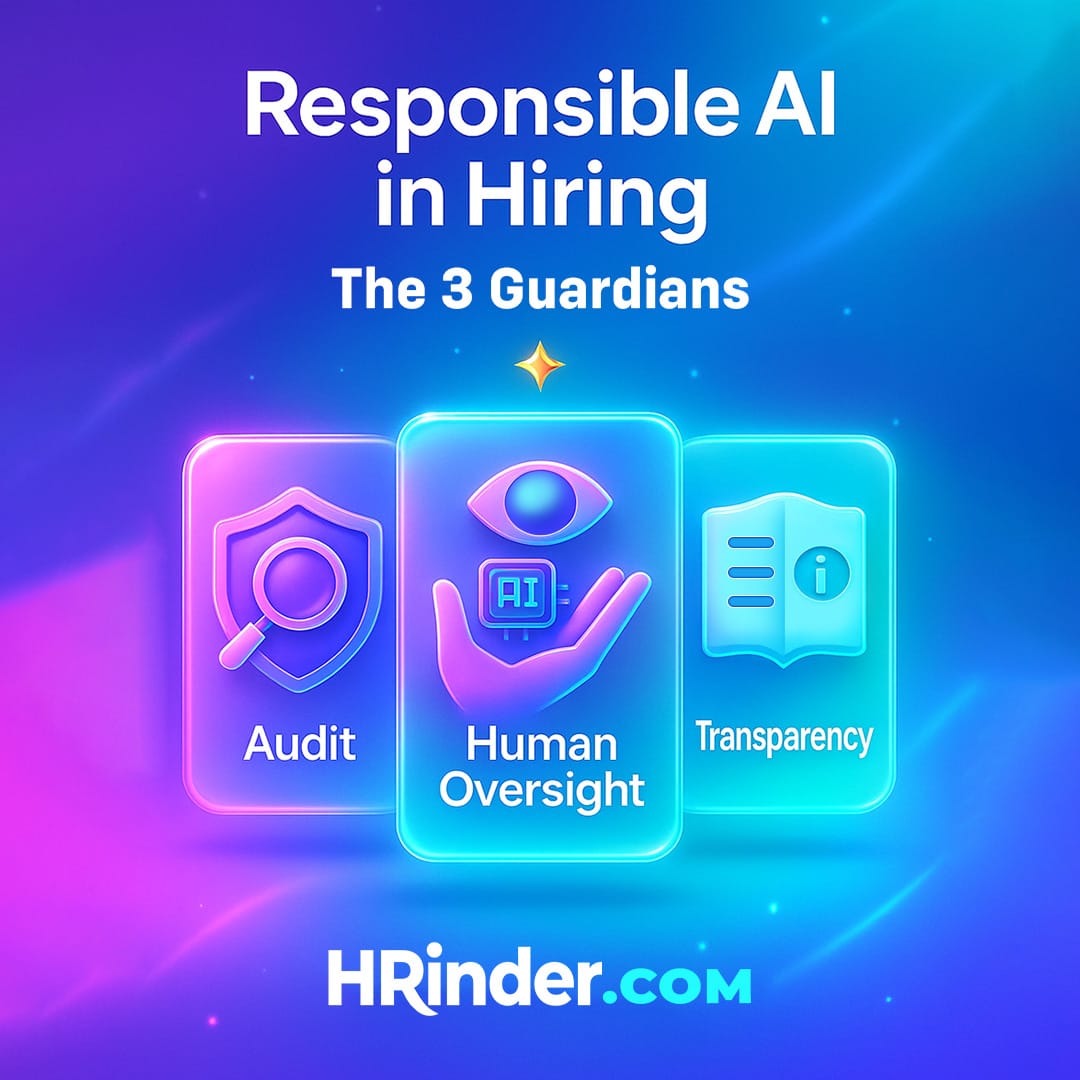
- Bias Audits: Continuously audit the model's output metrics to ensure fair representation across different demographic groups at every stage of the hiring funnel.
- Diverse Training Data: Proactively curate and use representative, high-quality data to train the models, and employ techniques like adversarial debiasing to neutralize historical skew.
- Human-in-the-Loop: AI must be an augmentation tool, not an autonomous decision-maker. Final hiring decisions must retain human oversight to provide contextual judgment and prevent algorithmic exclusion.
By embracing AI responsibly, we can engineer a truly equitable and efficient pipeline, ensuring that the next wave of great tech talent is hired based on what they can build, not where they come from.
What specific metric are you tracking to measure the success of your de-biased tech recruiting efforts?