
💻 Beyond the Spreadsheet: Leveraging Infrastructure Data for Precision Hiring

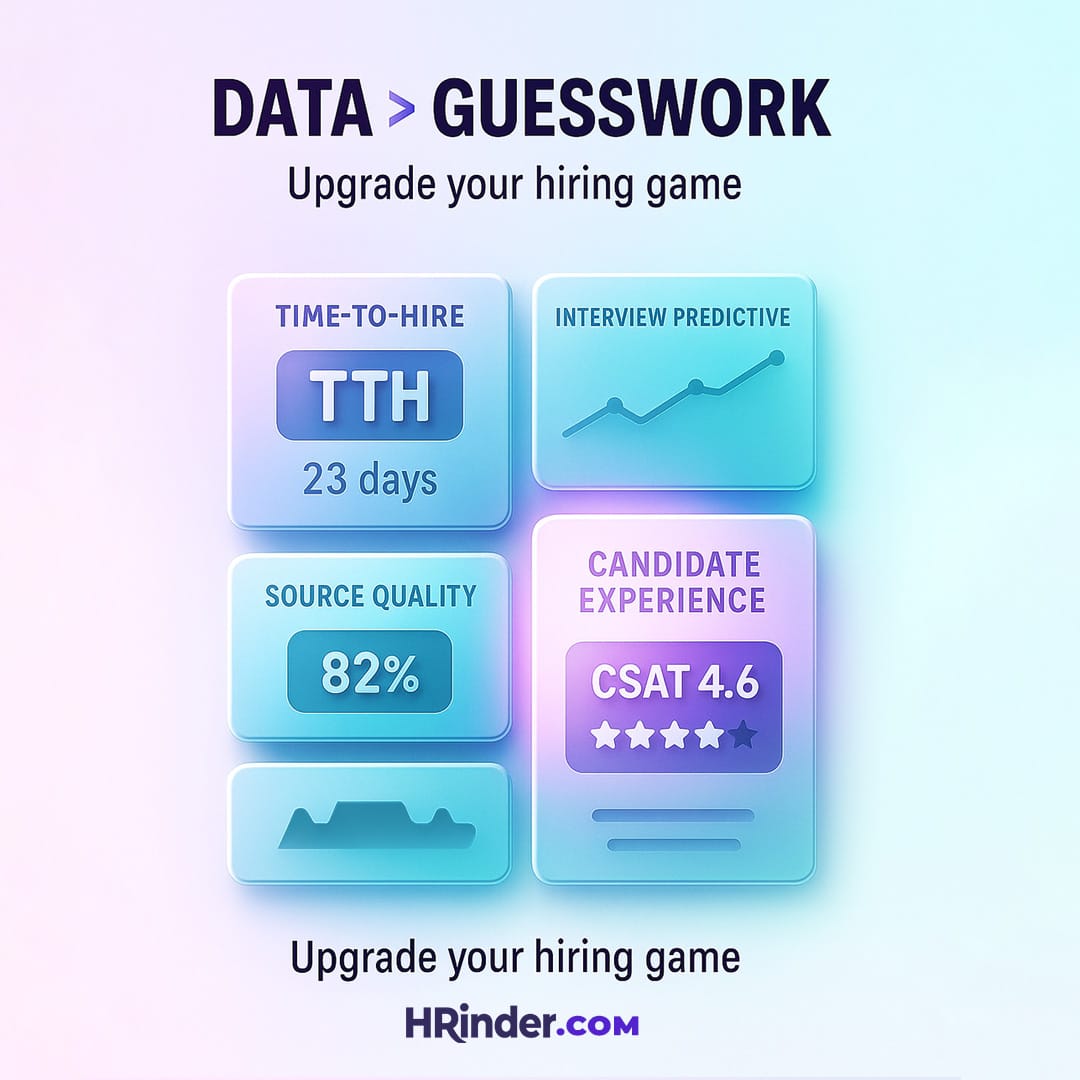
In the IT and Tech space, a "bad hire" doesn't just cost money; it can introduce security vulnerabilities and decelerate development cycles. Precision is paramount.
We often talk about data analytics in operations, but the most strategic application might be in Talent Acquisition, turning the hiring pipeline from a subjective process into a measurable, optimized workflow.
The IT Professional's Guide to Data-Driven TA:
- 1. Optimizing Conversion Ratios by Stage:
- The Data Point: Track the precise conversion rate between every single stage.
- The Insight: Low conversion from the Technical Assessment to the Interview Loop might indicate a misalignment between the assessment's difficulty and the job requirement, leading to the false rejection of qualified candidates. This metric is a direct feedback loop on the validity of your screening tools.
- 2. Measuring "Quality of Hire" through System Integration:
- The Method: Integrate your Applicant Tracking System with your Performance Management System and even code repository/ticketing systems.
- The KPI: Define Quality of Hire using metrics like first-year retention, time-to-first-major-contribution, or average sprint velocity. A strong metric allows you to objectively rank which sources deliver the highest caliber of talent.
- 3. Analyzing Deviation in Hiring Predictors:
- The Challenge: Subjective scoring in interviews often leads to noise.
- The Solution: Analyze the standard deviation in interview panel scores for the same candidate. By tightening score deviation, you increase the reliability and objectivity of your assessment process.
Data Analytics is not about replacing human judgment - it's about removing human bias. By applying the same rigorous analytical standards we use for code and systems to our hiring process, we build more resilient, high-performing IT teams.
How is your team currently leveraging internal dev metrics (like code commit history or bug fix rate) to retroactively validate successful hiring patterns? Let us know in the comments!