
The Binary Code of Inclusion: Actionable D&I Steps for Your Tech Hiring Pipeline

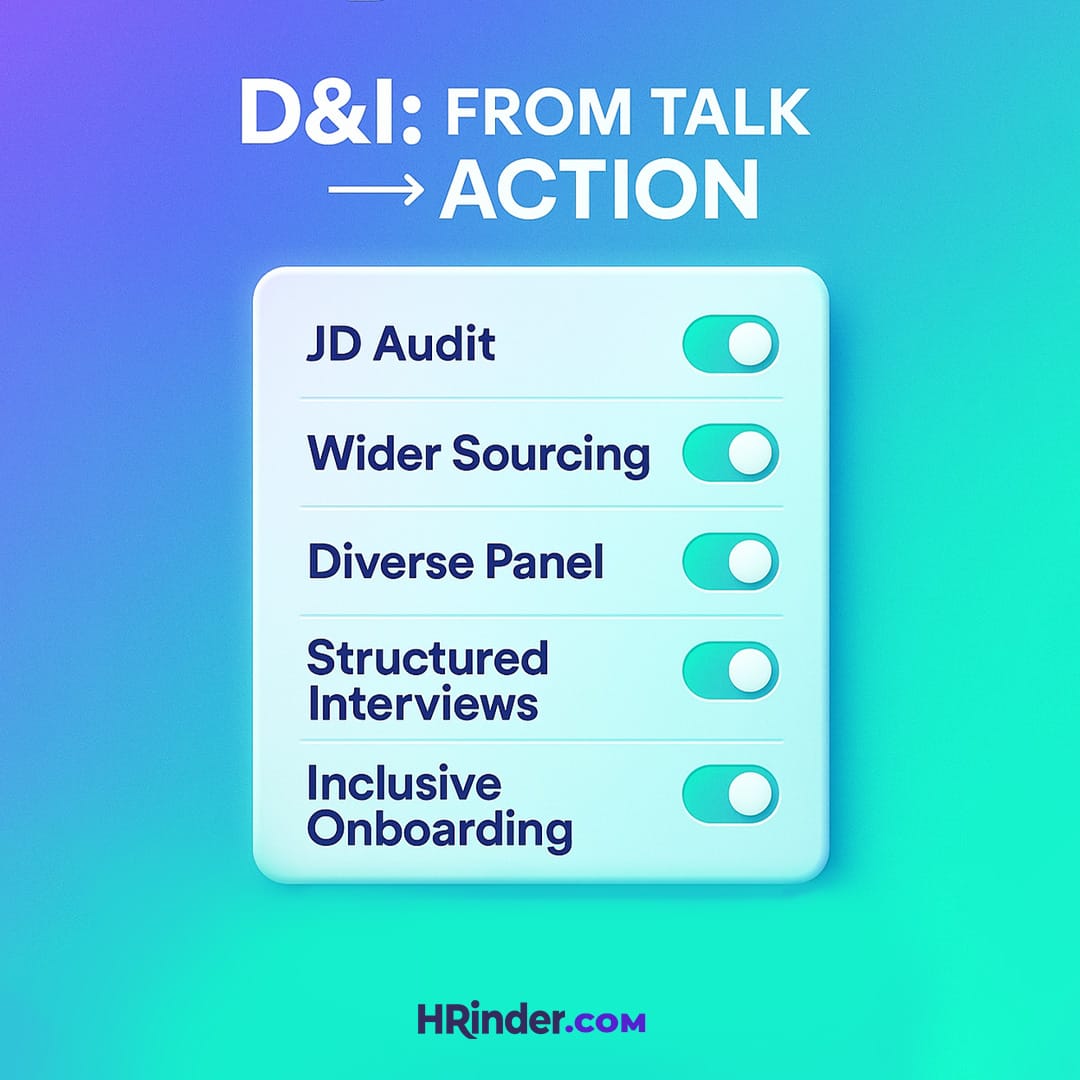
Diversity and Inclusion in the tech sector is not merely a social objective - it's an engineering problem with an optimization solution. To build truly resilient and market-aware products, your team needs heterogeneous perspectives. Stagnation occurs when development teams echo chamber one another.
Here are five critical, actionable steps your engineering and HR teams can implement to debug and upgrade your D&I hiring pipeline.
1. De-Bias the Documentation: Auditing Job Specifications
The language used in job descriptions can inadvertently filter out qualified candidates. This is a common point of friction in the early stage of the funnel.
- Actionable Step: Implement a text analysis tool (or establish a formal review protocol) to flag gender-coded terms, aggressive language, and hyper-specific requirements that aren't truly essential.
- Goal: Shift the focus from personality traits and historical experience to quantifiable, demonstrable skills and core competencies.
2. Optimize Talent Sourcing Channels (OTSC)
Relying on internal referrals or mainstream job boards often leads to iterative hiring - you keep hiring people who look and think like your current team.
- Actionable Step: Allocate sourcing budget and time to specialized channels. This includes organizations supporting women in STEM and dedicated communities for neurodiverse professionals.
- Goal: Increase the input size and diversity of the top of your funnel.
3. Standardize the Evaluation Function
Unstructured interviews introduce noise (bias) into the signal (candidate competence). The technical evaluation must be deterministic and fair.
- Actionable Step: Mandate structured interviewing. Create a documented rubric of core competencies for each role and assign specific, predetermined questions to assess those competencies. Implement a standard scoring mechanism and require interviewers to justify their score based only on the candidate's response to the set question.
- Result: You move away from subjective "culture fit" assessments toward objective, skill-based "contribution alignment".
4. Diversify the Review Hierarchy
The composition of your hiring panel is a direct reflection of your stated values. A non-diverse panel creates a biased assessment environment and can deter diverse candidates.
- Actionable Step: For all roles, require a hiring panel that includes representation from different genders, ethnicities, and/or seniority levels (beyond just the immediate hiring manager).
- Impact: This helps cross-validate feedback and provides diverse perspectives on a candidate’s potential success within the organization.
5. Extend Inclusion Beyond the Offer
D&I fails if diverse hires leave due to a non-inclusive environment. Retention is the ultimate metric of success.
- Actionable Step: Integrate D&I principles into your onboarding process. This could involve providing new hires with resources on Employee Resource
- Goal: Ensure the workplace culture is configured to support the success of all employees, driving down attrition rates for underrepresented groups.
Building diverse tech teams is hard work, but the payoff is undeniable.
What specific tools or metrics does your engineering team use to track D&I success in hiring? Share your stack in the comments.