
🚀 The IT Talent Revolution: Why Skills-Based Hiring is Your Next Strategic Imperative

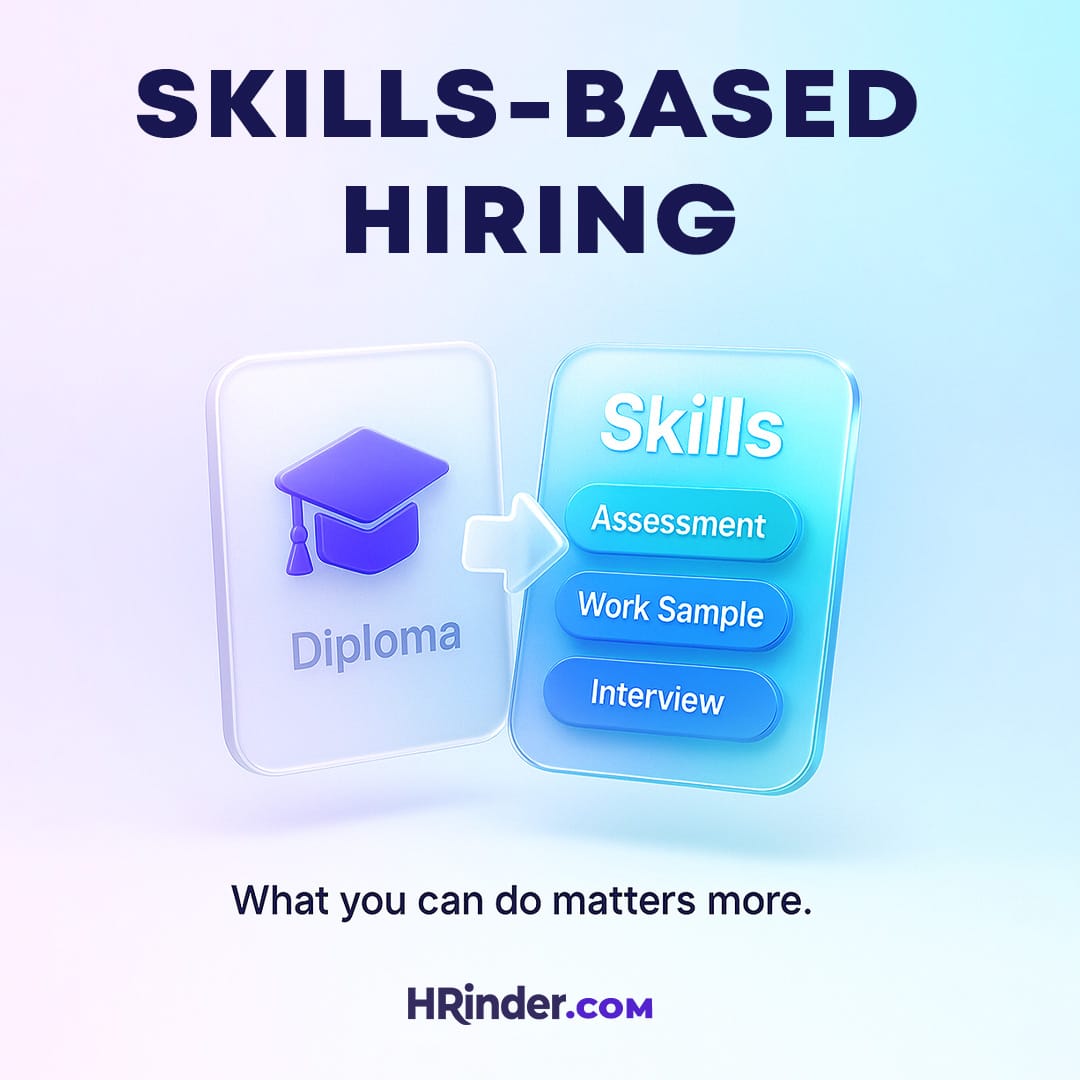
In the fast-paced world of Information Technology (IT), a four-year-old degree in an obsolete language is a liability, not an asset. The industry's foundational truth - that skills have a shrinking half-life - is finally forcing a critical shift in how we hire.
The era of credential-based hiring is ending. Welcome to the age of Skills-Based Hiring (SBH).
What is Skills-Based Hiring in Tech?
Skills-Based Hiring is an approach that prioritizes a candidate's demonstrated, practical abilities and core competencies over traditional proxies like university degrees or years of experience.
For IT, this means:
- Focusing on the Can Do: Assessing a developer's actual ability to solve a real-world coding problem rather than just checking a box for a Computer Science degree.
- Leveraging Technology: Using tools like automated coding challenges, technical assessments reviews to objectively measure hard and soft skills.
- De-emphasizing Pedigree: Recognizing that proficiency in Cloud Architecture or Cybersecurity principles can be acquired through bootcamps or self-directed learning, not just traditional academia.
Why SBH is Exploding in the IT Sector
The growth of SBH isn't a nice-to-have in tech; it's a business-critical response to market realities:
1. Bridging the Skills Gap & Future-Proofing
The demand for specialized IT skills far exceeds the supply coming from traditional pipelines.
- Agility is Key: The shelf-life of a technical skill is estimated to be under three years. SBH identifies candidates with high learning agility and the precise, current competencies needed to drive digital transformation. You're hiring for what the job is now, not what it was ten years ago.
2. Expanding the Talent Pool
By removing rigid degree requirements, you instantly open your pipeline to a massive, hidden pool of "Skilled Through Alternative Routes".
- Inclusion Drives Innovation: Veterans, self-taught coders often bring diverse perspectives and proven problem-solving skills, leading to more innovative and robust technical solutions.
3. Drastically Improving Efficiency and Quality of Hire
Traditional resume screening is a poor predictor of performance. SBH uses objective, data-driven methods.
- Reduced Mis-Hires: Companies using SBH report up to a 90% decrease in mis-hires, saving substantial costs.
- Faster Time-to-Hire: Automated skills assessments effectively filter candidates early in the process, cutting down the time and effort spent by busy engineering managers on irrelevant interviews. This speeds up the process of getting critical roles filled.
The Tech Tools Driving the Revolution
Technology is the engine of the SBH shift. We now have platforms that allow you to test skills with precision and scale:
- Automated Coding Assessments: Platforms that provide standardized, real-time coding challenges and automatically grade the solution's correctness and adherence to best practices.
- Virtual Sandbox Environments: Tools that place a candidate in a simulated cloud or infrastructure environment to test hands-on, real-world expertise.
- Skills Taxonomies & AI Matching: AI-driven tools map your employees' and candidates' skills against a global, constantly updated framework, allowing for granular matching that goes beyond simple keyword searching.
If you're struggling to fill critical roles, your pipeline isn't the problem - your process is. Embracing a skills-first approach is the strategic way to build an agile and future-ready tech team.
💬 What is the most effective skill assessment tool or method your engineering team uses today? Let's discuss in the comments! 👇