
The Silent Burnout: Navigating "Search Fatigue" Without Losing Yourself

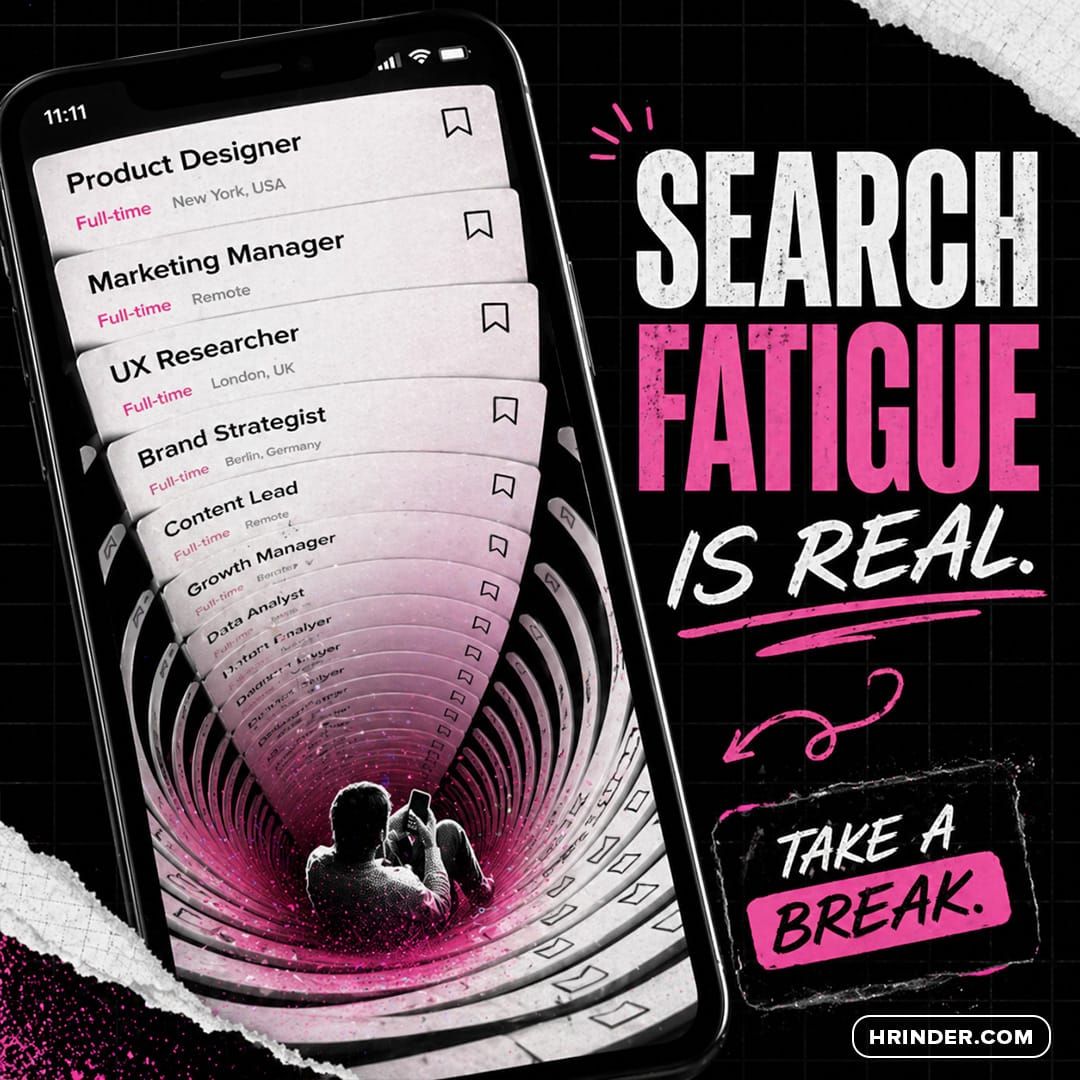
Finding a job is often described as a full-time job in itself. But there is a crucial difference: a standard 9-to-5 usually comes with a paycheck, social interaction and a sense of completion at the end of the day.
A long-term job search? It often comes with silence, uncertainty and the repetitive emotional "highs and lows" of applications and rejections.
This leads to a specific kind of burnout known as Search Fatigue. If you’re feeling drained, cynical or uncharacteristically anxious, you aren't "lazy" or "unmotivated" - you’re experiencing a physiological response to prolonged stress.
What Does Search Fatigue Look Like?
It’s more than just being tired of writing cover letters. It manifests in ways that can actually hinder your performance:
- Decision Paralysis: Staring at a job description for an hour, unable to decide if you should apply.
- Diminishing Returns: Spending more hours searching but accomplishing less.
- Personalization of Rejection: Feeling that a "no" from a company is a judgment of your personality or life’s work.
- Physical Symptoms: Tension headaches, disrupted sleep or "tech neck" from hours hunched over a laptop.
Shifting the Strategy: From Grinding to Sustaining
To stay resilient during a long search, you have to treat your mental health as a strategic asset. If your mental health crumbles, your interview performance and networking quality will follow.
1. Create a "Minimum Viable Day"
On days when your energy is at 10%, don't try to go at 100%. Define what a "successful" low-energy day looks like. Maybe it’s just sending one thoughtful email or updating one section of your portfolio. Consistent, small steps prevent the guilt of "doing nothing" without causing a total crash.
2. The "Digital Sunset"
The 24/7 nature of job boards creates a false sense of urgency. Most recruiters aren’t looking at your application at 11:00 PM on a Tuesday. Set a "Digital Sunset" - a time when all job-related tabs are closed and notifications are silenced. This allows your brain to enter "recovery mode".
3. Build a "Non-Work" Identity
When you’re unemployed or pivoting, your identity can feel like it’s in limbo. Reclaim it by leaning into hobbies or roles that have nothing to do with your career. Be a runner, a baker, a volunteer or a gamer. Remind yourself that you are a multifaceted human being not just a candidate in a pipeline.
4. Audit Your Circle
Not all "support" is helpful. If certain friends or family members constantly ask: "Any news yet?", it’s okay to set a boundary. Gently let them know: "I’m working hard on it, and I’ll share updates when I have them. For now I’d love to talk about literally anything else!"
The Bottom Line
Resilience isn't about having an endless supply of energy, it’s about knowing how to refill your tank when it runs dry. Taking a three-day break from your search isn't "wasted time" - it’s maintenance.
You cannot pour from an empty cup and you cannot sell your best self to a potential employer if you’ve lost sight of who that person is.
Be kind to yourself today. The right opportunity is coming, but make sure you’re healthy enough to enjoy it when it arrives.