
The End of the "Guessing Game": How VR and AI are Revolutionizing Candidate Assessment

We’ve all been there - the "perfect" candidate on paper who turns out to be a total mismatch in practice. For decades, hiring has been a high-stakes guessing game fueled by polished resumes and rehearsed interview answers.
But a massive shift is happening. We are moving away from declarative hiring (asking people what they can do) and toward performative hiring (watching them do it). At the heart of this revolution is the powerful synergy between Virtual Reality (VR) and Artificial Intelligence (AI).
The "Flight Simulator" for the Modern Workplace
For years, pilots and surgeons have used simulations to hone their crafts. Now, that same technology is entering the corporate office and the retail floor.
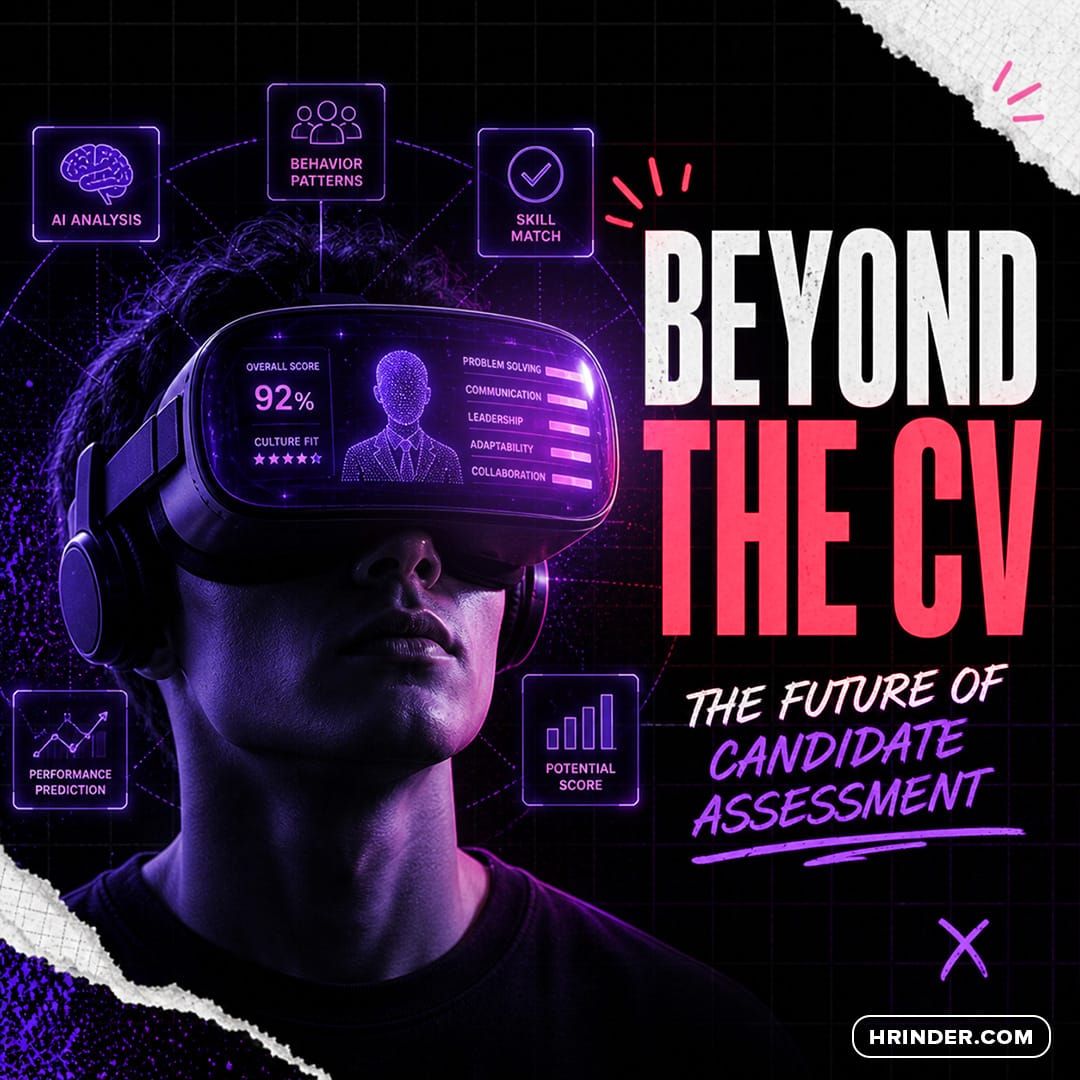
When a candidate puts on a VR headset, they aren't just looking at a screen, they are immersed in a 360-degree digital twin of their potential workplace. This allows companies to test for:
- High-Stakes Technical Skills: Can an engineer identify a hairline fracture in a virtual turbine?
- Situational Awareness: How does a retail manager handle a simulated "Black Friday" rush with multiple digital customers demanding attention simultaneously?
- Soft Skills & EQ: AI-powered avatars can now mimic human frustration, joy or confusion, forcing candidates to navigate difficult conversations in real-time.
AI: The Invisible Observer
While VR provides the environment, AI provides the insight.
During a VR assessment, AI isn't just looking for a "pass/fail" result. It tracks hundreds of data points that a human interviewer would never catch:
- Decision-Making Latency: How long did the candidate hesitate before making a critical choice?
- Biometric Stress Response: Using integrated sensors, AI can measure heart rate or eye-tracking patterns to see how a candidate handles pressure.
- Efficiency Paths: Did the candidate take the most logical route to solve a problem, or did they get distracted by "noise" in the simulation?
By analyzing these metrics, AI creates a behavioral fingerprint of the candidate, offering a level of objectivity that human interviews - plagued by unconscious bias - simply cannot match.
Why This Matters for the "New World of Work"
The benefits of this tech-forward approach extend beyond just finding a "smart" person:
- Drastically Lower Turnover: Candidates get a "realistic job preview". If they hate the VR simulation, they likely won't enjoy the actual job. This leads to better self-selection.
- Diversity and Inclusion: VR creates a standardized "level playing field". When everyone is assessed in the exact same virtual scenario, factors like what a person wore or where they went to school fade into the background.
- Cost Efficiency: While the initial setup for VR can be an investment, it pales in comparison to the cost of a "bad hire" - which can cost a company up to 2× that employee's annual salary.
Final Thoughts
We are witnessing the death of the "gut feeling" hire. As VR and AI continue to evolve, the interview of the future won't take place in a boardroom - it will take place in a digital world where your skills do the talking.
The question for leaders today isn't if you will adopt these tools, but when. Because in 2026, the companies with the best talent won't be the ones with the best recruiters; they'll be the ones with the best data.
What's your take? Are you ready to trade the conference room for a headset? Let's discuss in the comments.